By: The Grit Staff
It is difficult to think of a piece of upland hunting kit that is more essential than a good knife. A knife is necessary to butcher the birds that we harvest. More than that, it is necessary for all manner of daily cutting tasks from opening a package of dog treats to cutting a dangling mudflap off a truck, as we recently had to do on a Montana road trip.
In our younger days, before the term ‘every day carry’ was even coined, most hunters carried a folding knife for general tasks. A single blade clip point lockback was about as ubiquitous as you could get. Big game hunters have long carried fixed blade knives for field butchering tasks, and upland hunters have recently trended toward the same, especially as such knives have gained popularity for general use.
It doesn’t take much of a knife to butcher most game birds. Heck, a pen knife or even a sharp rock can do the trick. However, at the end of a long day of hunting when you are cleaning out the truck by headlamp, you will appreciate a well-designed knife to make tedious butchering tasks faster and more comfortable.
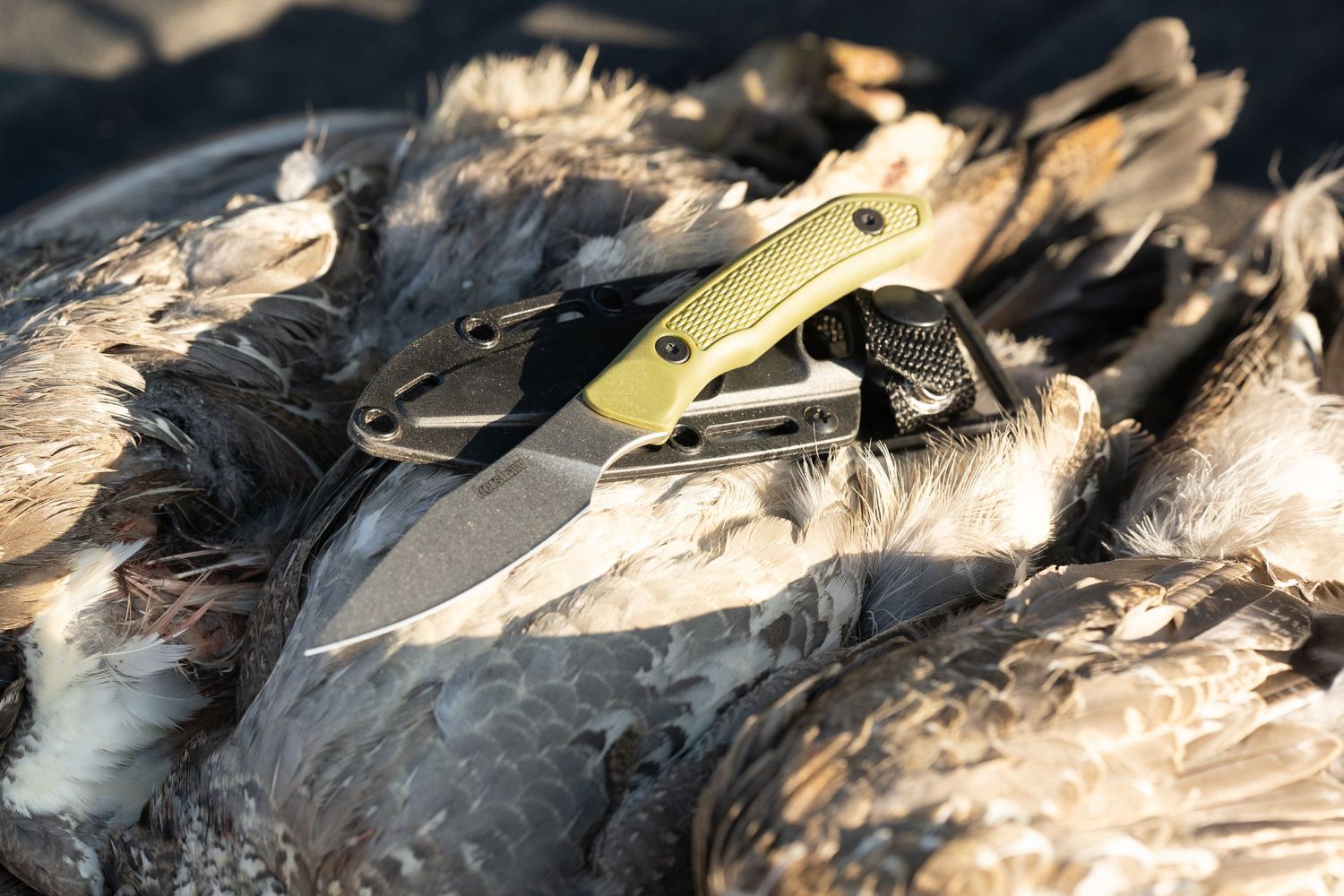
Enter the Kershaw Deschutes Caper. It’s the smaller sibling of the Deschutes Skinner, which as the name implies, is aimed more at ungulate hunters. Unlike the Skinner’s classic drop point, the Caper has a long tapered clip point and an overall smaller size, making it better suited to butchering upland birds.
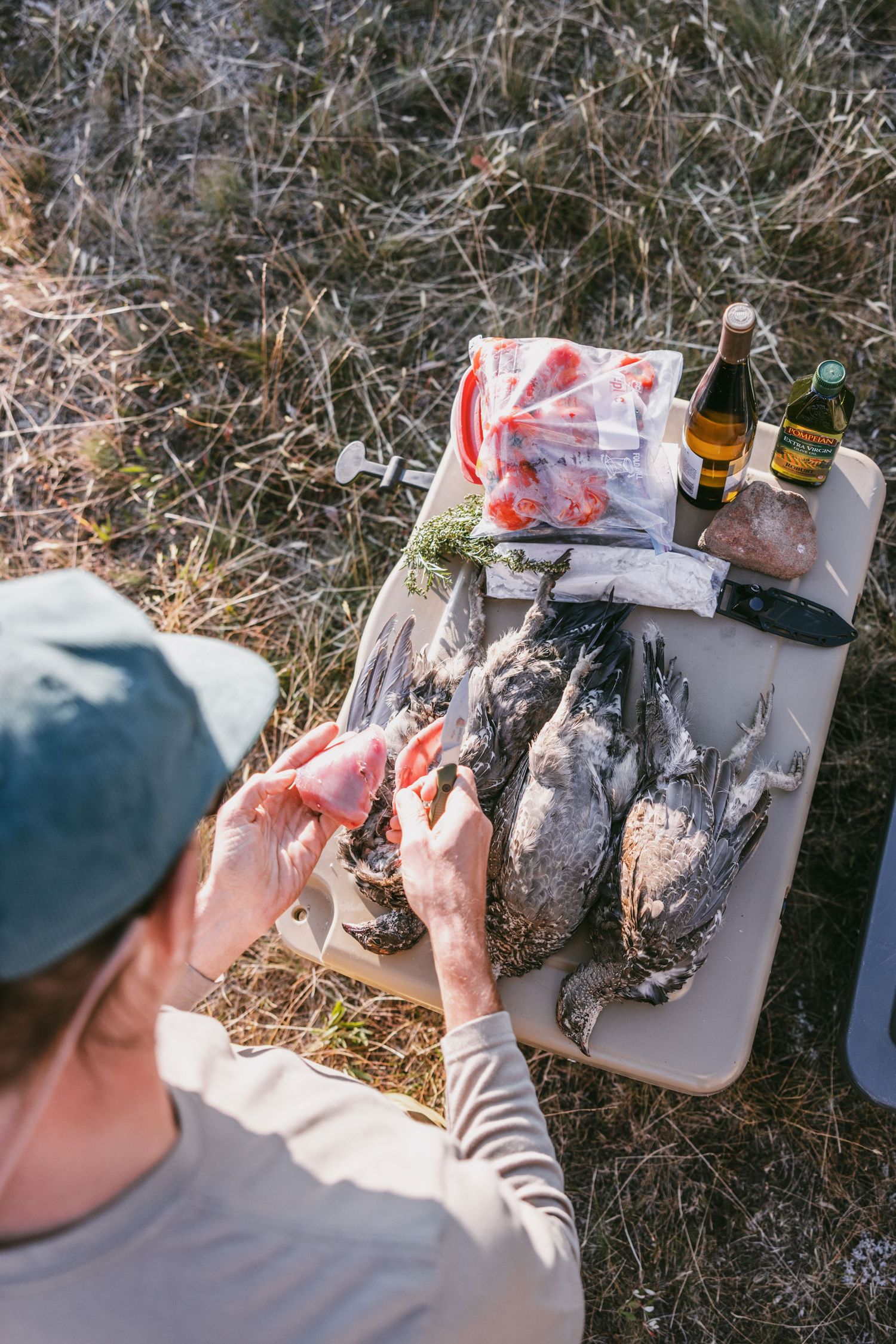
We tested the Deschutes Caper in the field on Wyoming and Montana grouse hunts. This little knife impressed us with its versatility. We were able to quickly breast out a half dozen blue grouse, then seamlessly switch to slicing soft tomatoes and vegetables for supper. General cutting tasks like opening packaging and cutting p-cord were fast and easy as well.
The first feature we noticed about this knife is the jimping on the blade’s spine. We really liked these ridges, which allowed us to choke up on the handle and gain pinpoint control of this knife’s narrow tip. They also made the knife easier to control with cold, bloody hands. The rubber-overlaid poly handle also provided a positive grip.
The Deschutes Caper’s blade is D2, a steel which has gained popularity especially due to its edge-holding performance. It’s not the best material nor the sharpest, but you can hone a very functional edge on it and expect that edge to hold up to wear.
We certainly noticed this durability with the Caper, butchering several dozen birds without any signs of needing a touch-up despite nicking plenty of bones. We expect that this blade will take some effort to sharpen when the time comes like most D2 knives.
Kershaw finished this knife in a no-nonsense stonewash, which effectively hides wear and tear. Overall, the knife looks nice and feels nice. If anything the grip could swell to fill the palm better, but that’s probably unnecessary for the lighter duty tasks the Caper was designed for.
This knife is a little larger than necessary for game bird butchering. The blade is 3.3 inches long, with an overall 7 inch length for the knife. That slightly larger size does make it more versatile though. It can easily do double duty and field dress a whitetail or function as a halfway decent survival knife.
So what's wrong with it? Well the sheath is…a sheath. It holds the blade securely enough, with a few nice touches like a drainage hole in the nylon material. We did like the added security of a thumb snap even though the sheath itself holds the blade snugly.
However, when it comes to attachment options, we felt like the sheath fell flat. It has a Velcro nylon webbing loop that you can use to attach it to a belt, but that drops the wear position of the knife and makes it a little more floppy.
Fortunately, you can simply remove the webbing, but then you're left with several slots on the sides of the sheath to try to mount it. These are far too narrow to run a belt through, and we even had trouble threading our upland vest straps through them. A few simple modifications to the sheath design could really increase wear options for this knife.
The Deschutes Caper compares favorably to other fixed blade ‘bird and trout’ analogs like the popular Benchmade Flyway, especially given the price point. Sure, it's made in China, but with a 60 dollar retail price, it is pretty hard to beat this little knife on value. It's even on sale right now through most outlets.
*The Grit was supplied with a testing sample. We were not otherwise compensated by the manufacturer for this review.