By: The Grit Staff
At The Grit, we love classic guns in upland covers- blued barrels, svelte actions, and warm wood. Why are we reviewing a waterfowl gun? Because for the large majority of upland hunters, it is simply impractical to spend a lot of money on a premium double. Most people can’t justify the cost of both an upland oriented gun and a waterfowl gun- they simply need one gun to do it all. We grew up in the Midwest, where a gun is expected to last a lifetime and do most anything that you need.
Enter the Weatherby Sorix, a new inertia-action shotgun. While Weatherby is a very American brand, the Sorix is an immigrant. Weatherby has never made their own shotguns. They have farmed them out over the years to everyone from SKB in Japan to ATA in Turkey. Word on the street is that the new Sorix is produced in Italy by Marocchi. The folks at Weatherby had a heavy hand in the design process for the new Sorix, bringing us features that are important to the modern American waterfowler. In addition, Weatherby finishes these guns in Wyoming, adding the stock paint jobs and performing final inspections.
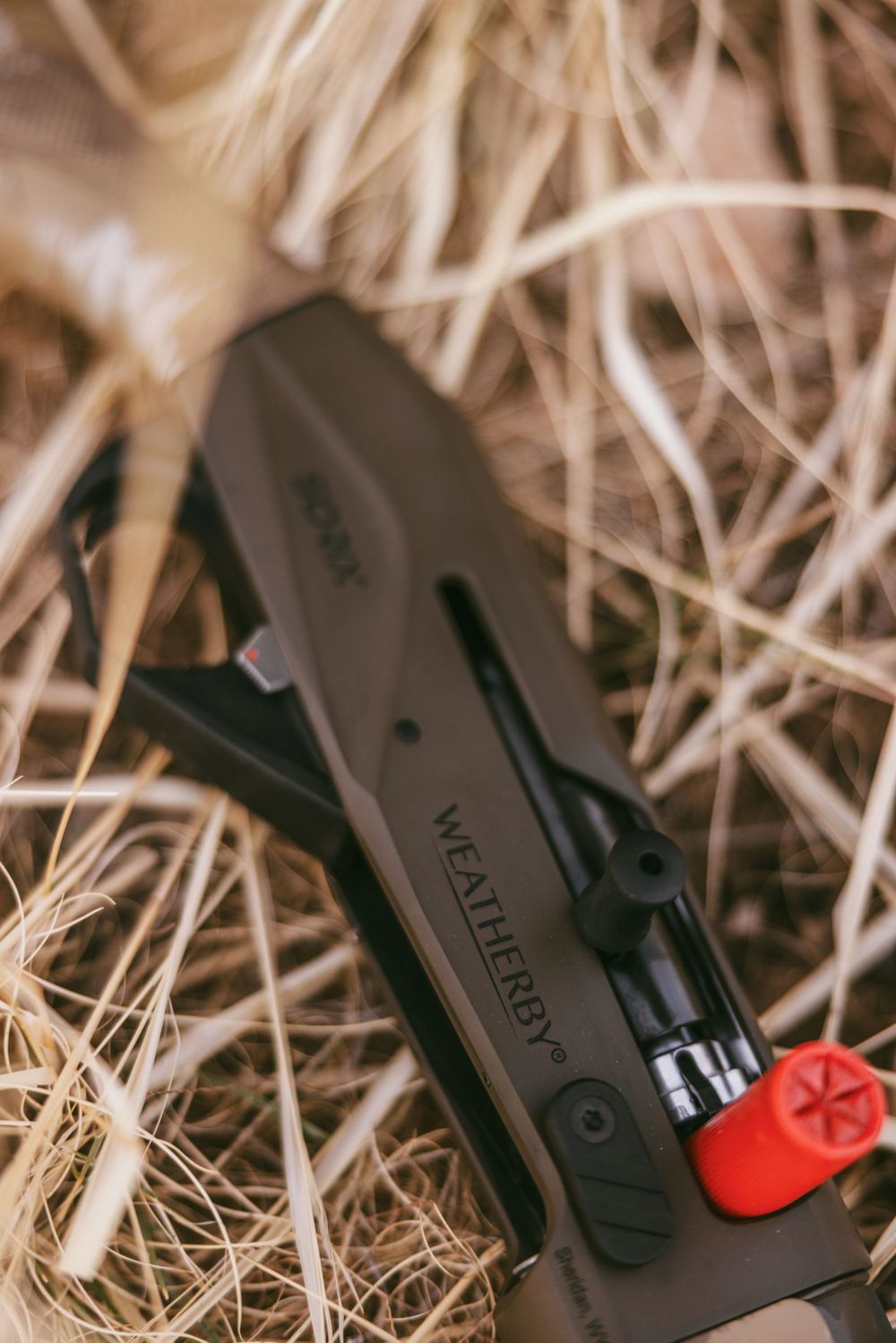
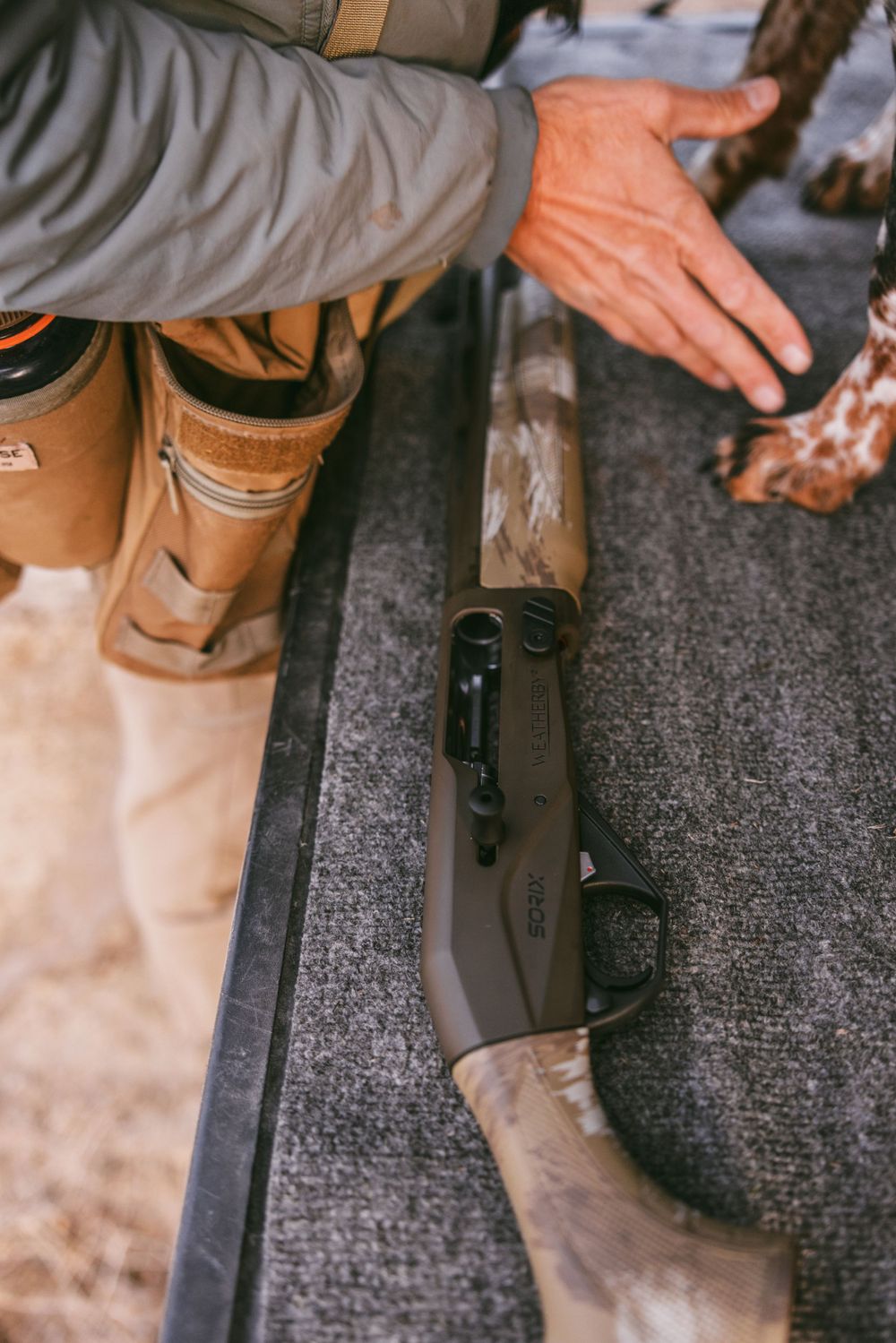
The Sorix’s inertia action is simple and reliable. At this point, the general components of an inertia autoloader are pretty well established, with manufacturers only making little tweaks to the system. One interesting tweak here is the reversible bolt handle. Weatherby designed the Sorix so you can move the bolt handle to the left side. This can be accomplished in the field without tools, making it easy to share a gun between right and left handed shooters- something we actually needed during testing.
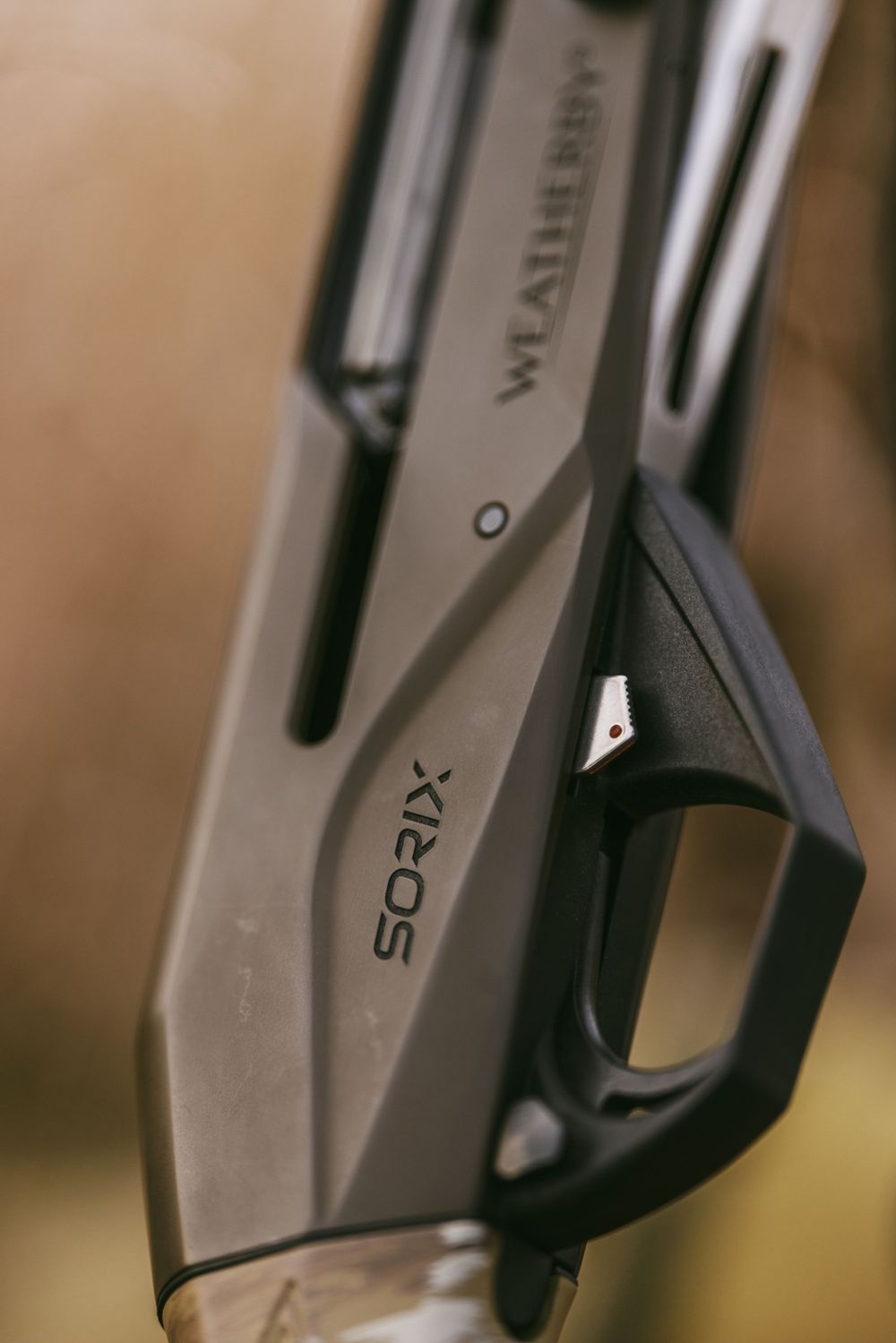
In all practicality, this is more of a clever marketing idea than a functional improvement. It means Weatherby doesn’t have to manufacture a bunch of true left-handed guns, but they can still give leftys reasonable functionality- minus the right side ejection of course. The design also introduces an open slot to the left side of the action, increasing dirt and debris exposure. Gimmick or not, we dolike the feel of the bolt and other controls, including the reversible safety, large bolt release, and contoured magazine gate.
Does the Sorix go bang? Usually. We put a few hundred rounds through our 3-inch chambered 12 gauge test guns, and they handled everything from light target loads to heavy duck loads. Only once, we had a 2 ¾” shell hang up while cycling. This seems par for the course for an autoloader, especially a new out of the box sample.
Some reviewers have proclaimed that “Weatherby got rid of the dreaded ‘click’!” with the Sorix. Predictably, that’s BS. Any autoloader needs positive lug engagement to fire properly, and the Sorix is no exception. We had the opportunity to test this when putting the sneak on some wiley chukar. A cautious bolt let-down led to a whole lot of nothing a few minutes later when the covey flushed. If you just embrace the Sorix’s black gun vibes and slap the oversized bolt release, you’ll be fine.
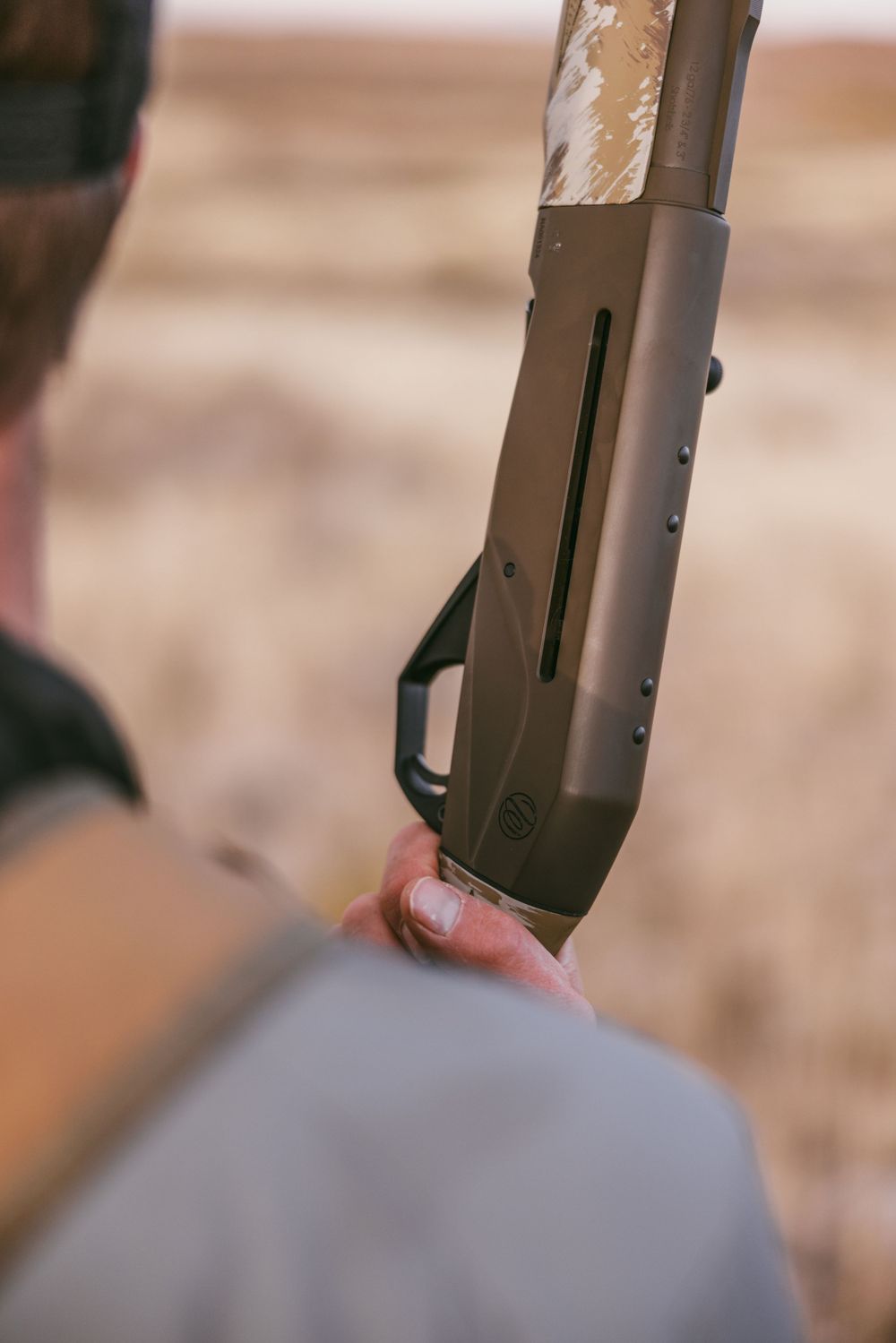
How does the Sorix perform for upland hunting? In addition to ducks, we tested the gun on pheasant and prairie chicken walks in Kansas and wild hun and chukar hunts in Wyoming. The Sorix was pleasant to carry, well-balanced, and handled well during fast-action flushes. Is it heavier and slower-swinging than other options? Certainly, but not to the point that it slowed us down or limited our tailgate count. The lighter-than-average trigger pull also made the Sorix feel more surgical than most autoloaders.
The Sorix patterned very well with both heavy duck loads and light target loads. It uses the same long Crio Plus chokes as Benelli’s flagship guns, and the forcing cone gives you exactly what you want- even, clean 50/50 shot pattern distribution at 30-40 yards. The gun comes with five chokes. We’d probably run the Improved Cylinder most of the time based on patterns, and maybe switch out to Modified for late season waterfowl.
The fit of this gun is a crowd-pleaser, falling somewhere between the ‘Browning fit’ and the ‘Benelli fit’. The checkering on the grip and forearm feel positive but don’t chew up your hands. The 12 gauge comes with a rubber cheek piece on the comb, which we aren’t really into. If a gun fits you properly, cheek slap should be a non-issue, and this rubber rand is just a weak spot in the gun’s long-term durability. The 20 gauge version comes without it. Weatherby makes the standard shim kit that allows you to play around with minor gun fit adjustments at home.
The Sorix is pre-tapped for a turkey red dot sight, and comes with one of the infernal fiber optic front sights that are now the norm on many shotguns. We’d prefer a simple brass bead, but that’s an easy change. Other trappings include sling mount points and a quick-change magazine plug.
The Sorix is currently offered in 28-inch barrelled 12 and 20 gauge options. Four stock patterns are paired with different cerakote colorways, and these guns look darned handsome for plastic lead-slingers. The 12 gauge also comes in a 3.5 inch chamber for goose hunting. There are some whispers of shorter barrels for the turkey bros and a wood stock option. The Sorix retails for 1500.00, which is a few hundred bucks cheaper than the comparable Benelli Super Black Eagle 3 or the Browning Wicked Wing A5.
Who is the Sorix for? We think it is a versatile scattergun for down-to-earth weekend warrior hunters, especially folks that split their time evenly between pheasant cattails and the duck blind. It’s a well-designed workhorse auto that wows with its good looks, great performance, and competitive price point. Hunters that spend most of their time hiking for birds would probably be better served by the 20 gauge Sorix, which we are hoping to test in the near future.
*The Grit was not compensated for this review.