By: The Grit Staff
There is no need to shoot another bird this season; a few more ounces of meat in the freezer are unnecessary. Today's hunt won't win any accolades. Someone else is bound to enamor the Instagram fanboys who crave tailgate body counts and lies. Nevertheless, we load gear into the dark truck. The destination isn't a predictable roadside covey, nor an easy limit. Chukar hunters have a code: challenge yourself, hike one more ridgeline, find your own spots, put in the work. There are no perfect disciples of this gospel, but the wild hills are our church. We don't know what they will give us, but we go.
Hours of driving pass. Dawn is coming, but the black mountains still loom above us. We hunch in blue hour stillness, peering at the bright screen of my phone. I drag an OnX base layer to and fro. “Let's check out this hilltop,” I suggest. On the south side of it, a slight smear of green marks where snow accumulates on the lee side. It is hard to tell whether it is cheatgrass or not, but it's worth a shot.
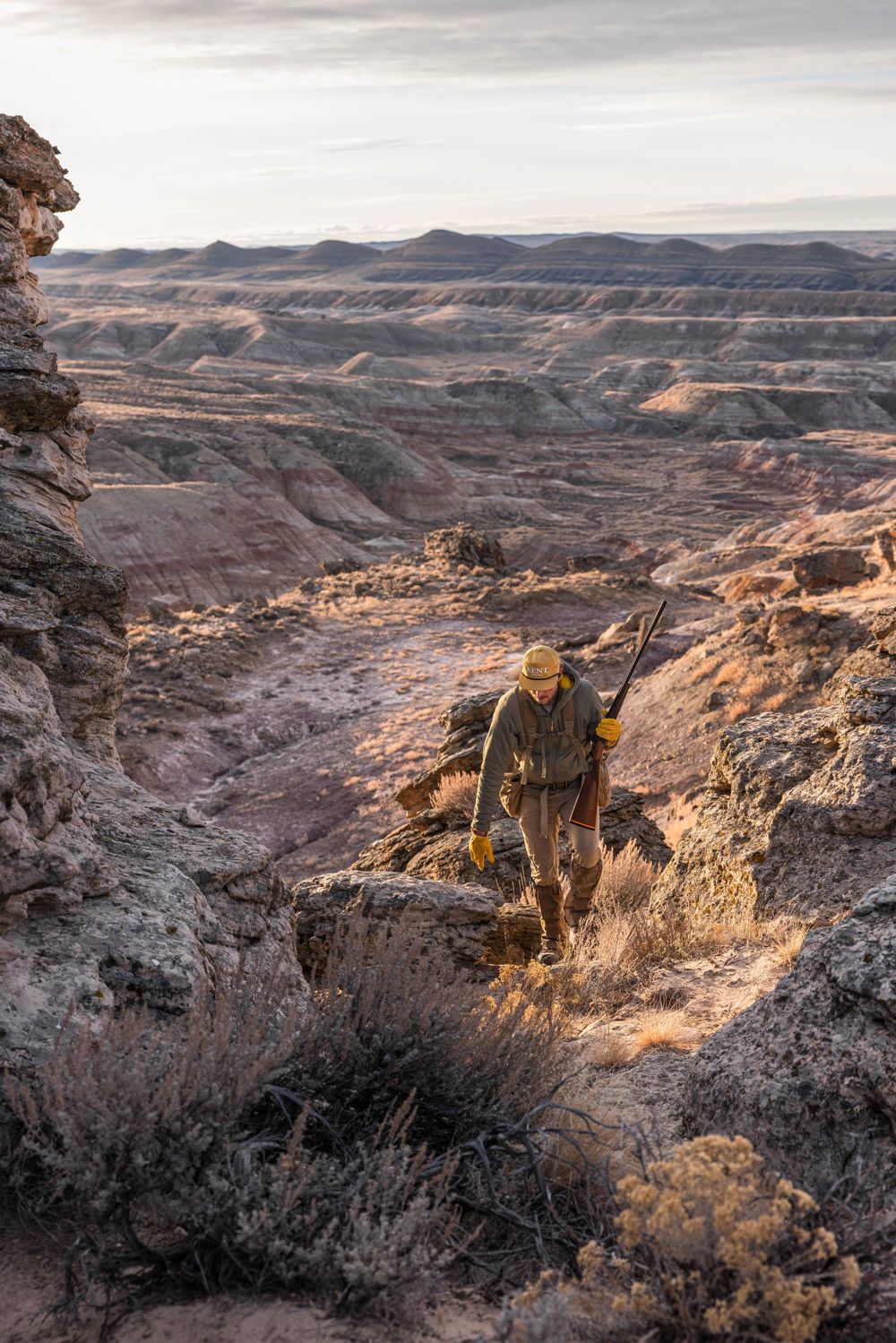
We break free from the truck and stride into the desert stillness. Gaining a ridge with minimal effort, Dan and I strike out past the hilltop without incident. We press on another mile into sunrise colors, flanking top and bottom of a deepening cliff band. Rounding a corner, I find fresh turds. I'm only half looking for birds at this point. I'm already content, a kid in a playland of house-sized boulders.
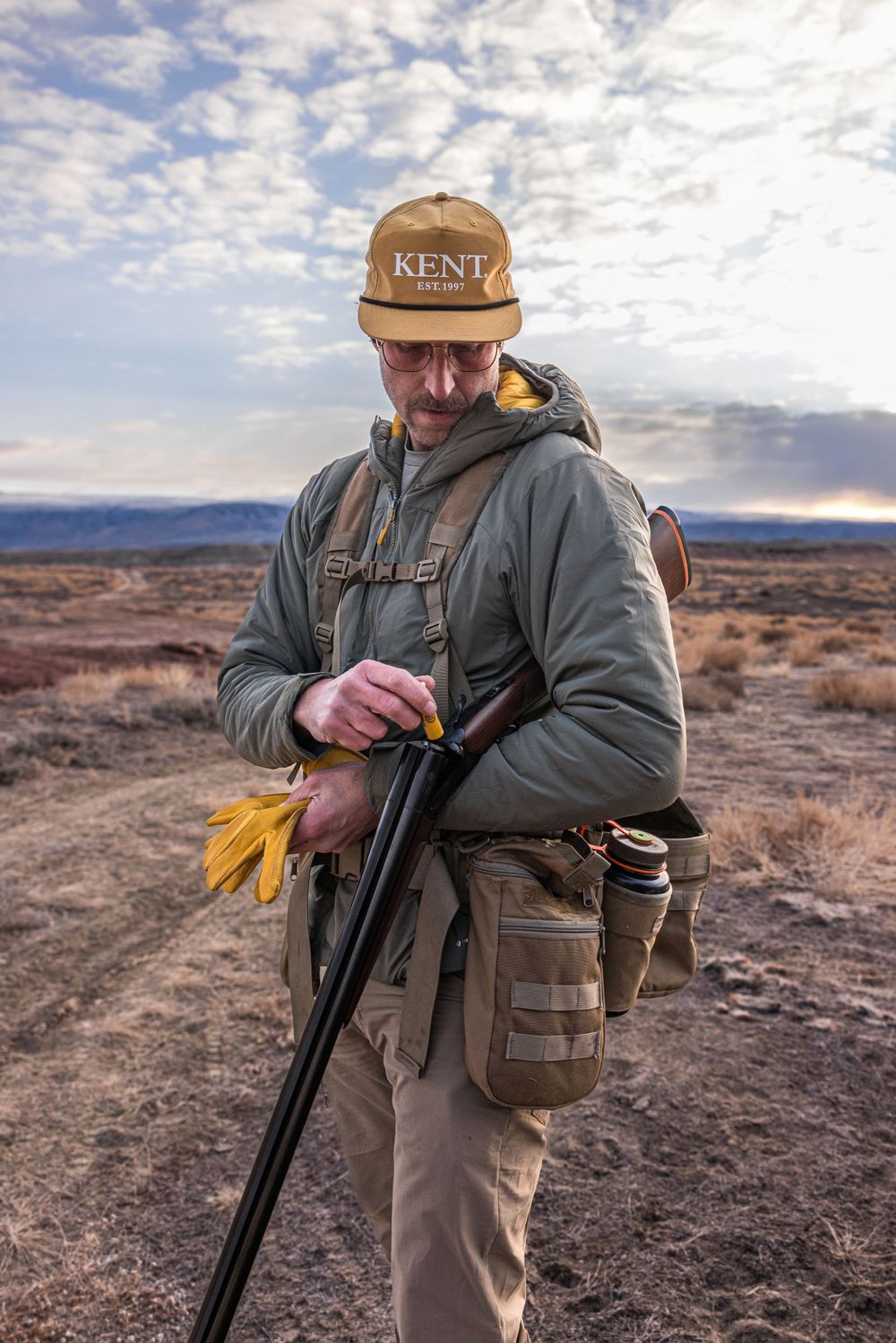
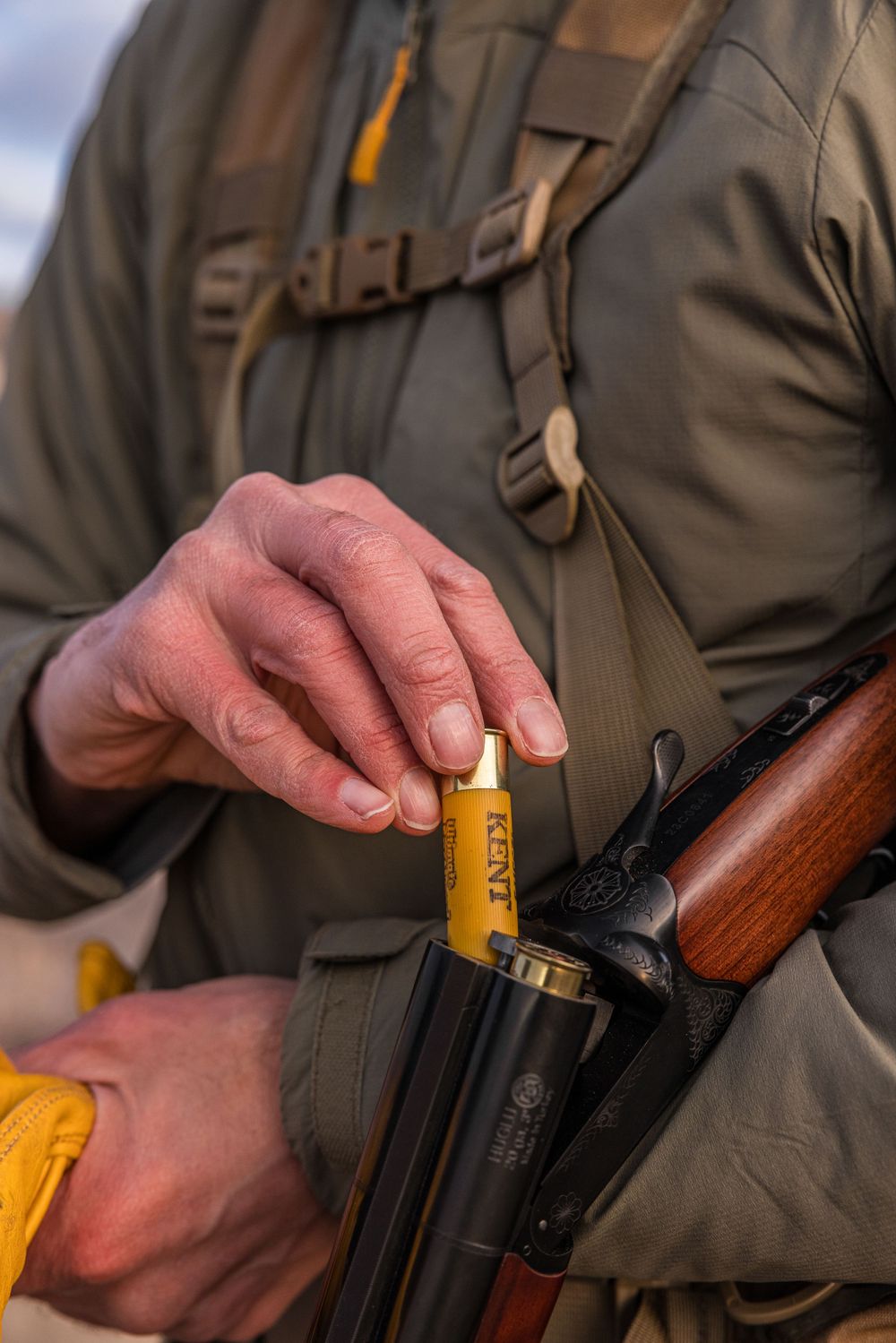
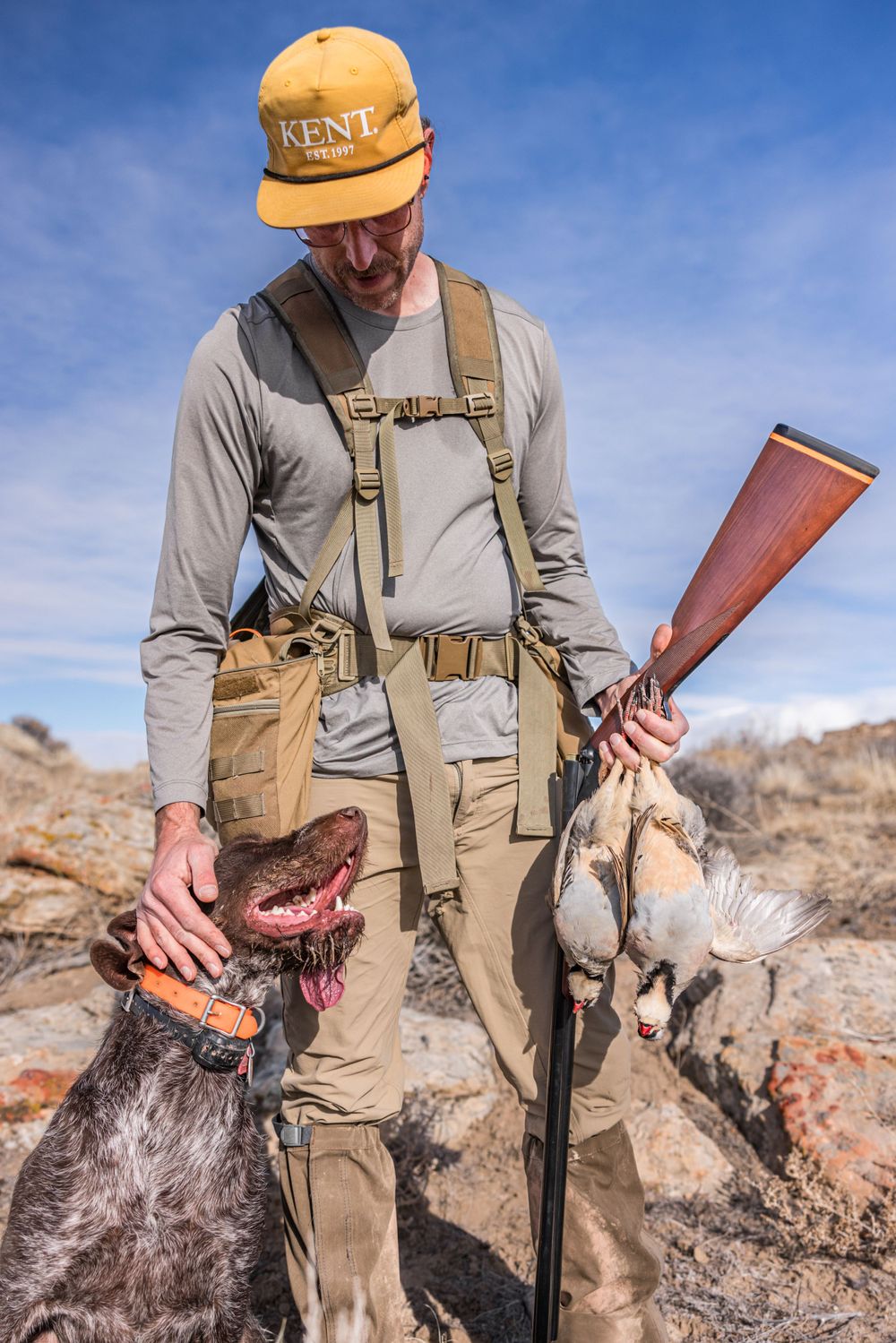
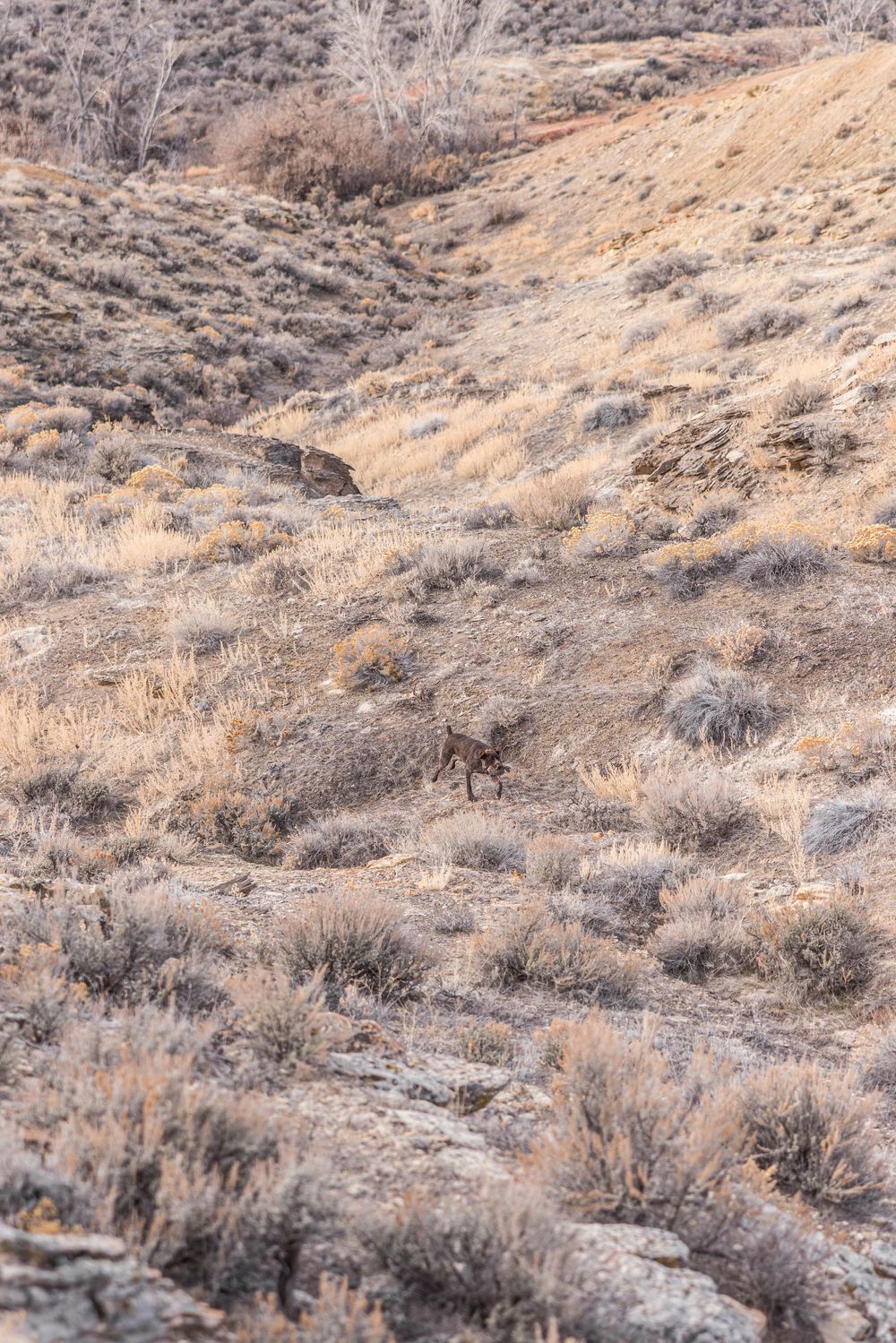
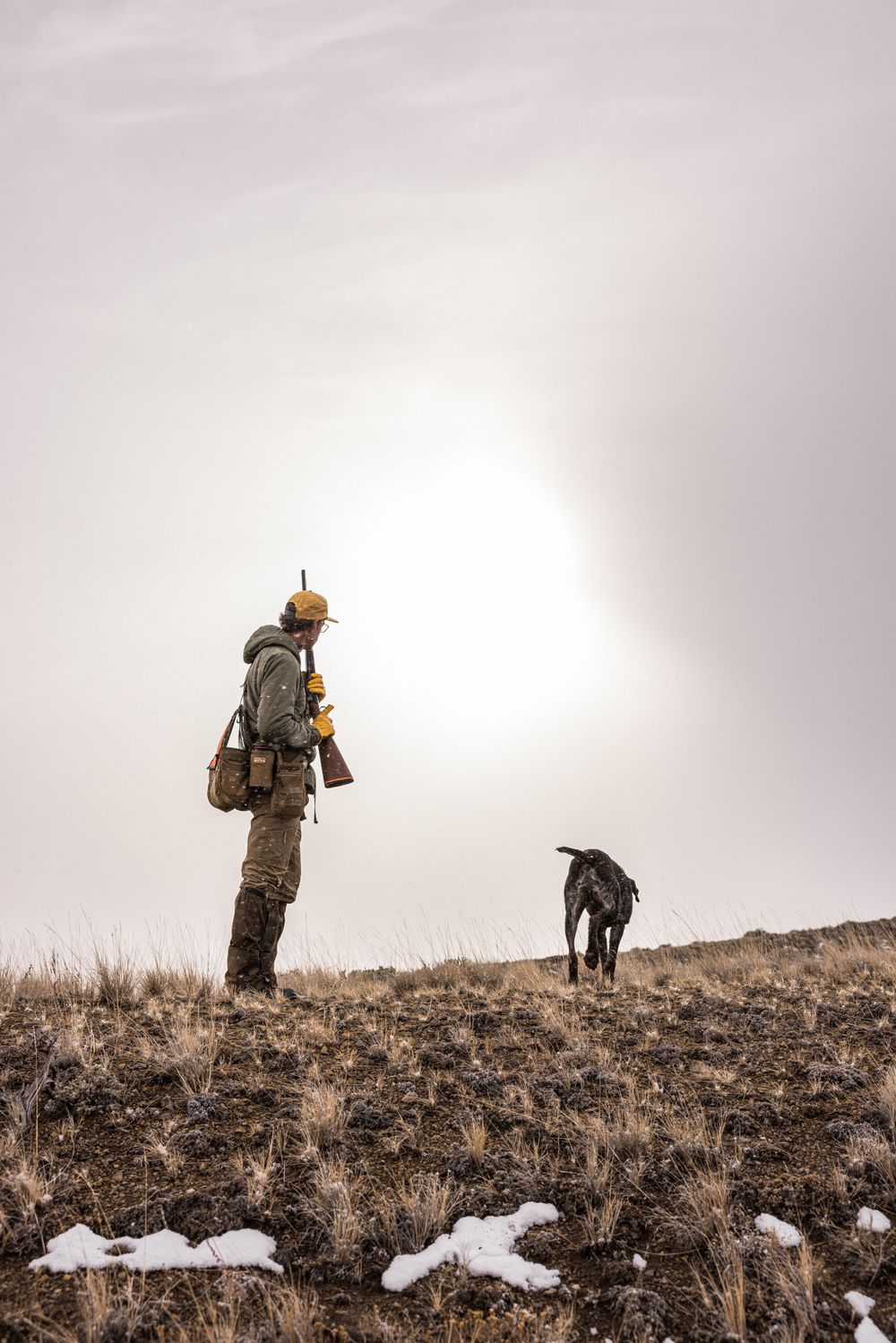
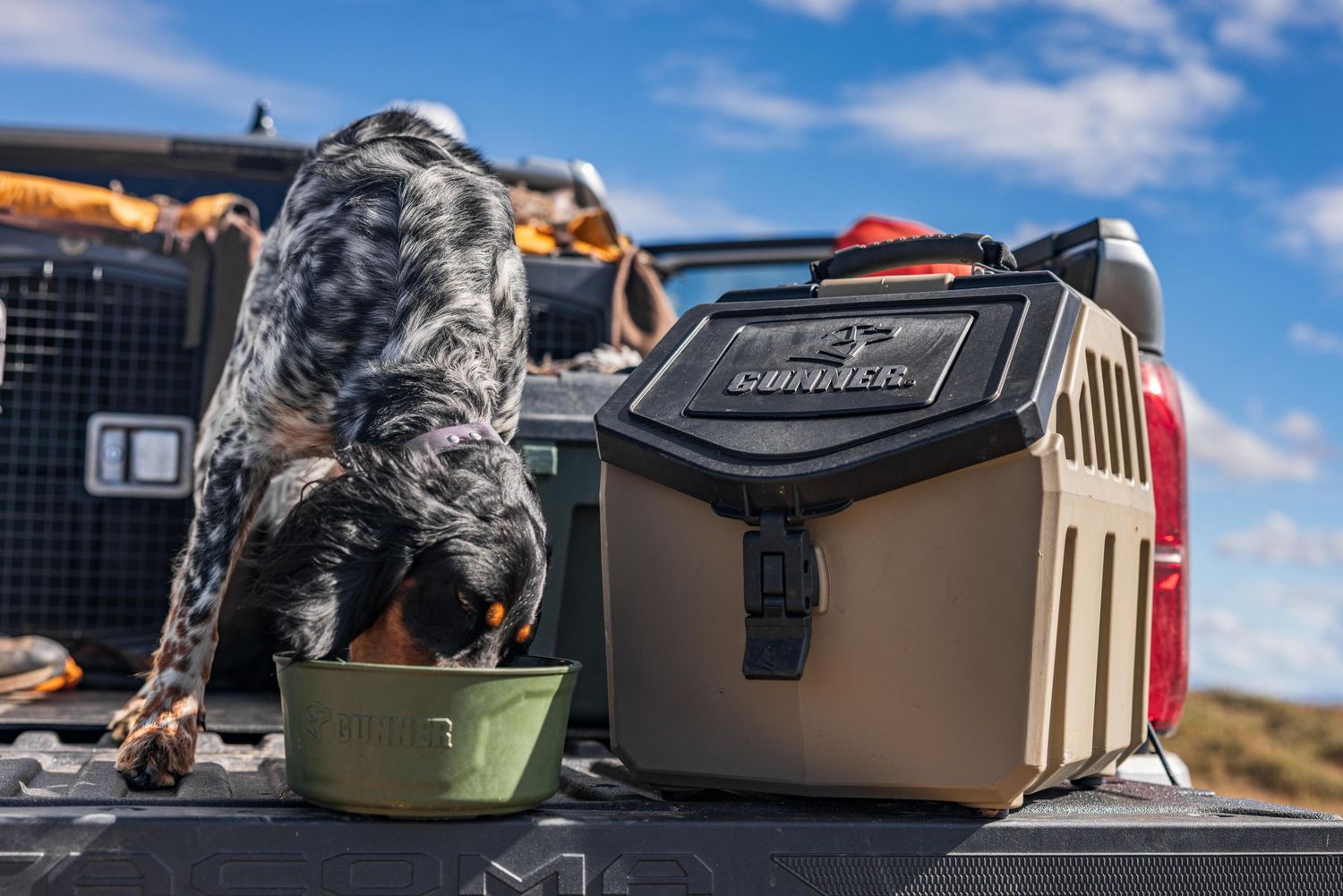
The ground is littered with bird tracks. They must be close, but where? Dan and Lefty find a cleft in the cliffs and descend to meet me. We wander aimlessly like Gen X teenagers at the mall. Dropping to a lower bench, Lefty gets excited. By extension, my own senses hyperfocus. I grip the forearm of my shotgun tighter. Dan's horse of a wirehair cut his teeth in this rough country. In his third season, he is mastering the game.
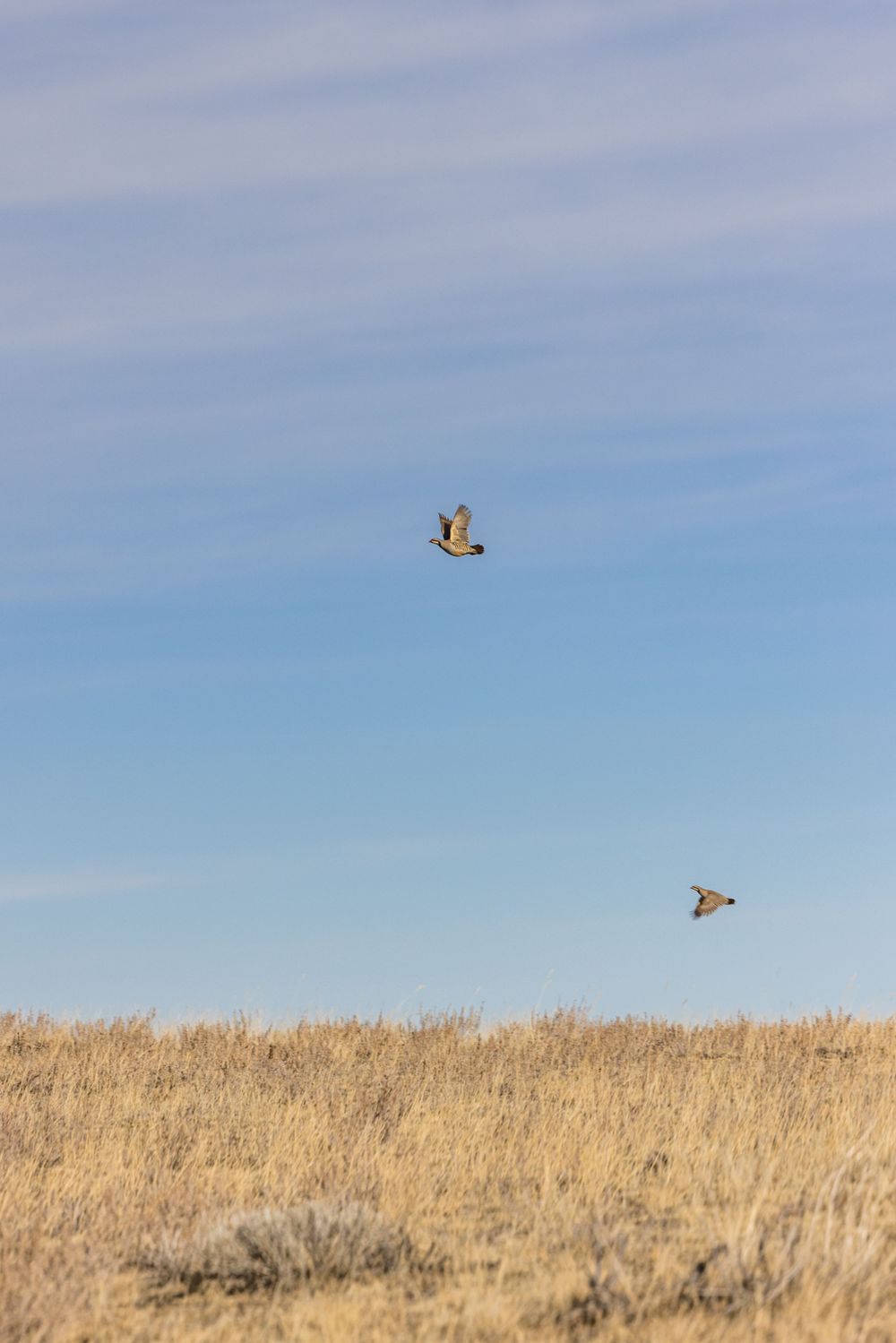
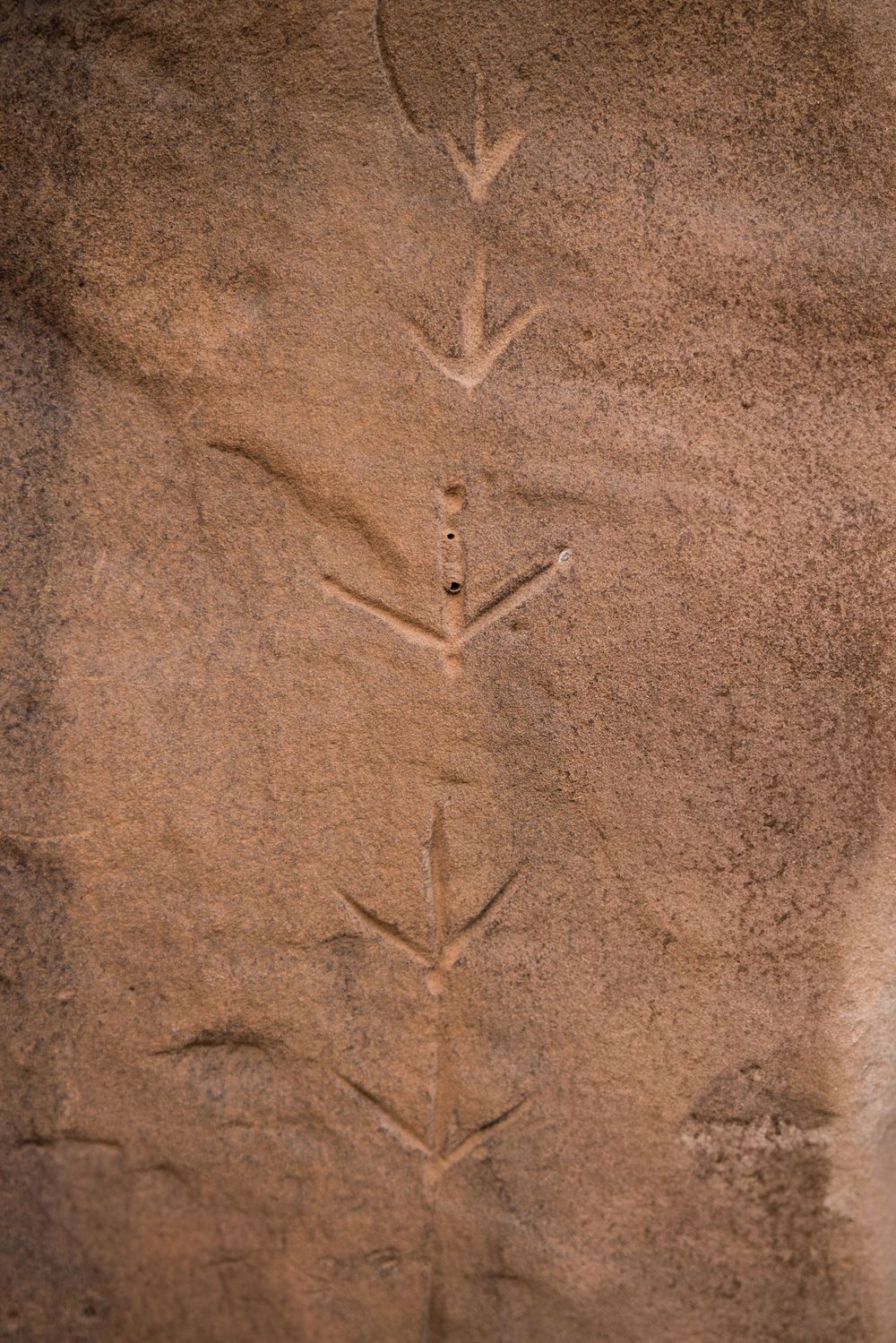
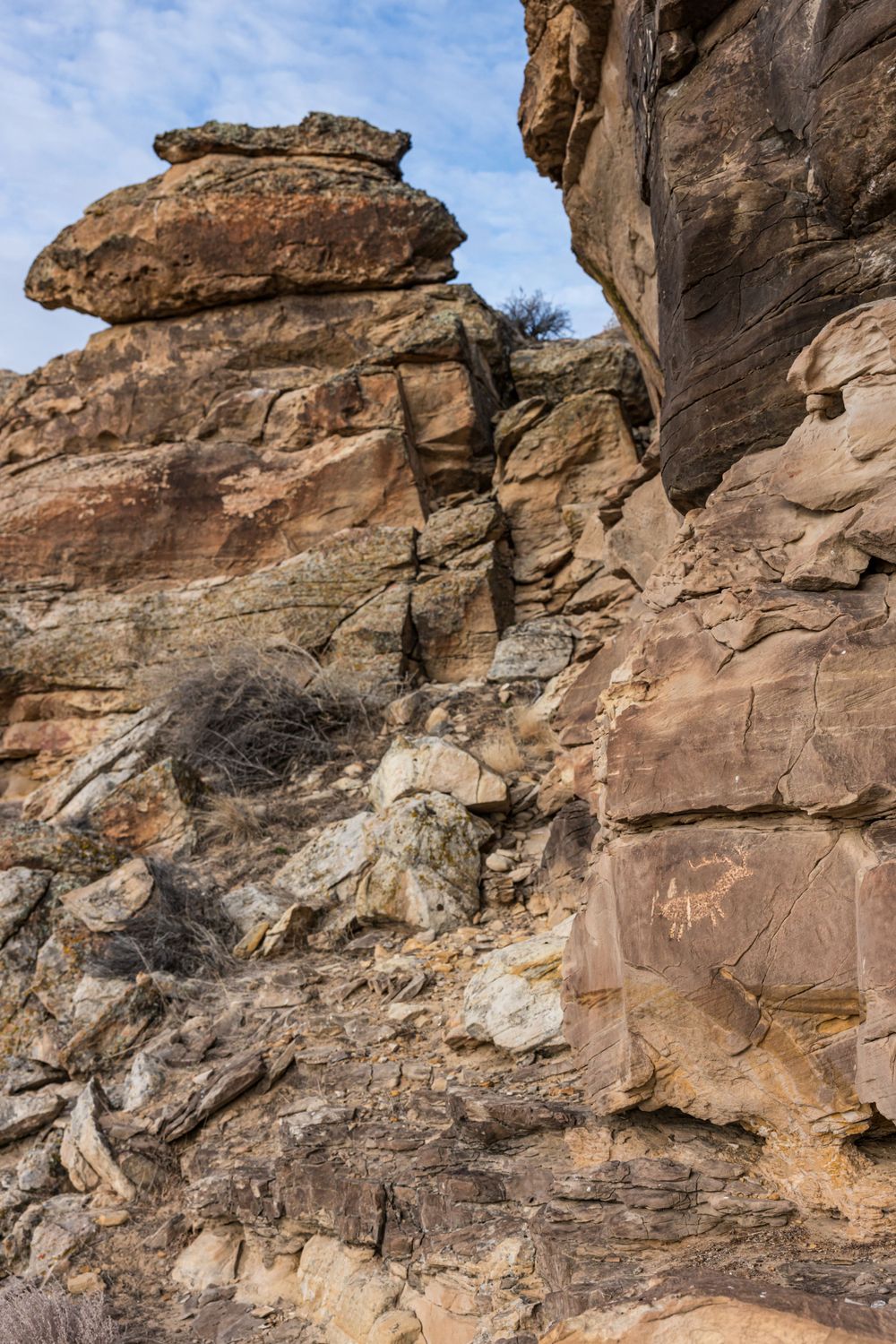
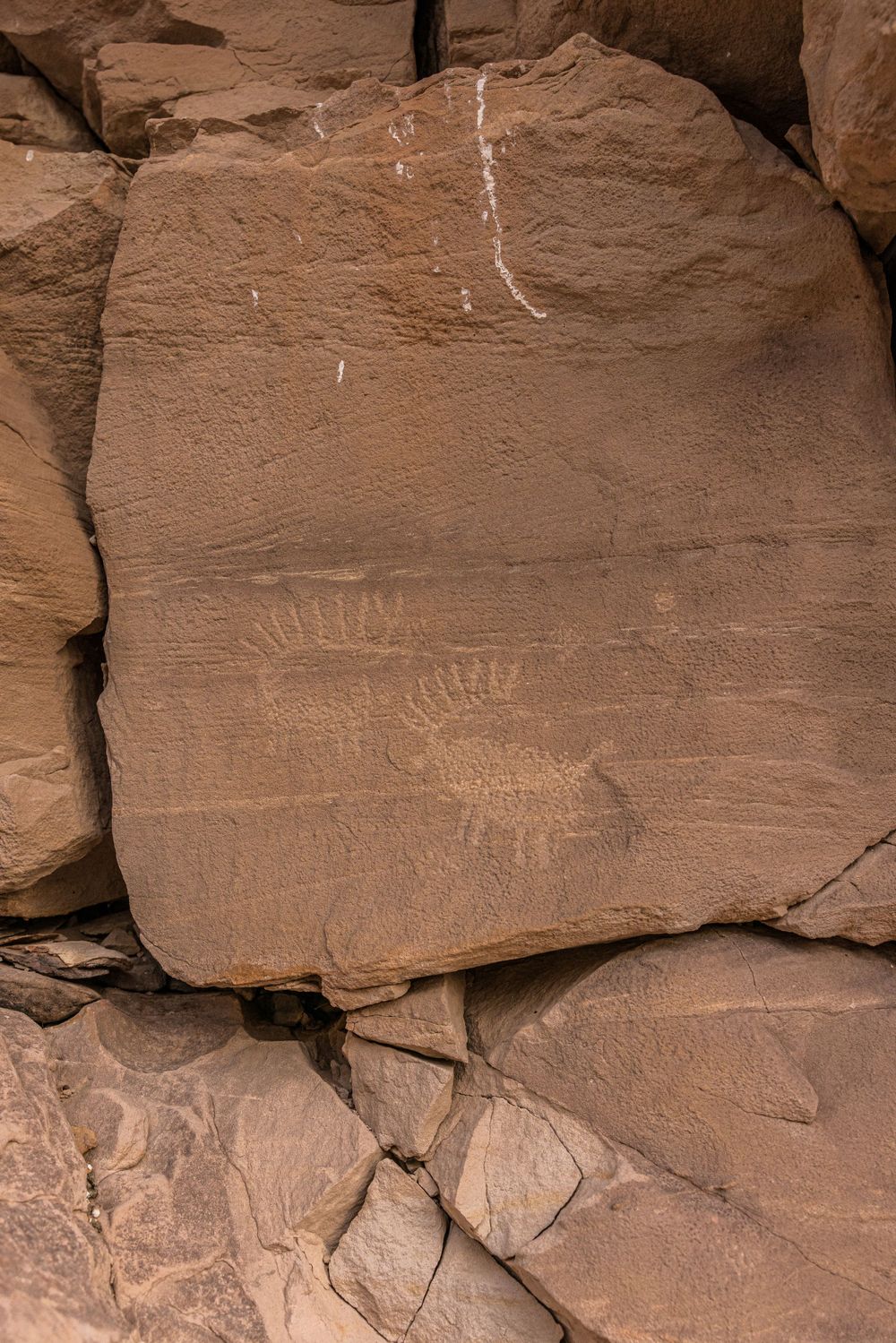
We follow the dog down onto a flat decorated with sandstone hoodoos. Dan calls out across an arroyo, “Petroglyphs.” Under a low rockshelter, pecked handprints, animals, and human figures loom out of the past. Lefty clearly has other interests, pulling us away as he stalks over a dune. The dog locks up just as a bomb goes off. Whirring wingbeats and shrieks echo in the rock
pillars as the covey wild flushes at 80 yards.
One would think they’d make it easier for us. After all, we drove for hours and hiked miles to find them, in a spot we had no idea would produce. But that is not their way. Insert cliches of devil birds and vengeance. Chukar are reputed to be the most difficult upland quarry. Deserved or not, the notoriety gives chukar hunters a superiority complex- and a code.
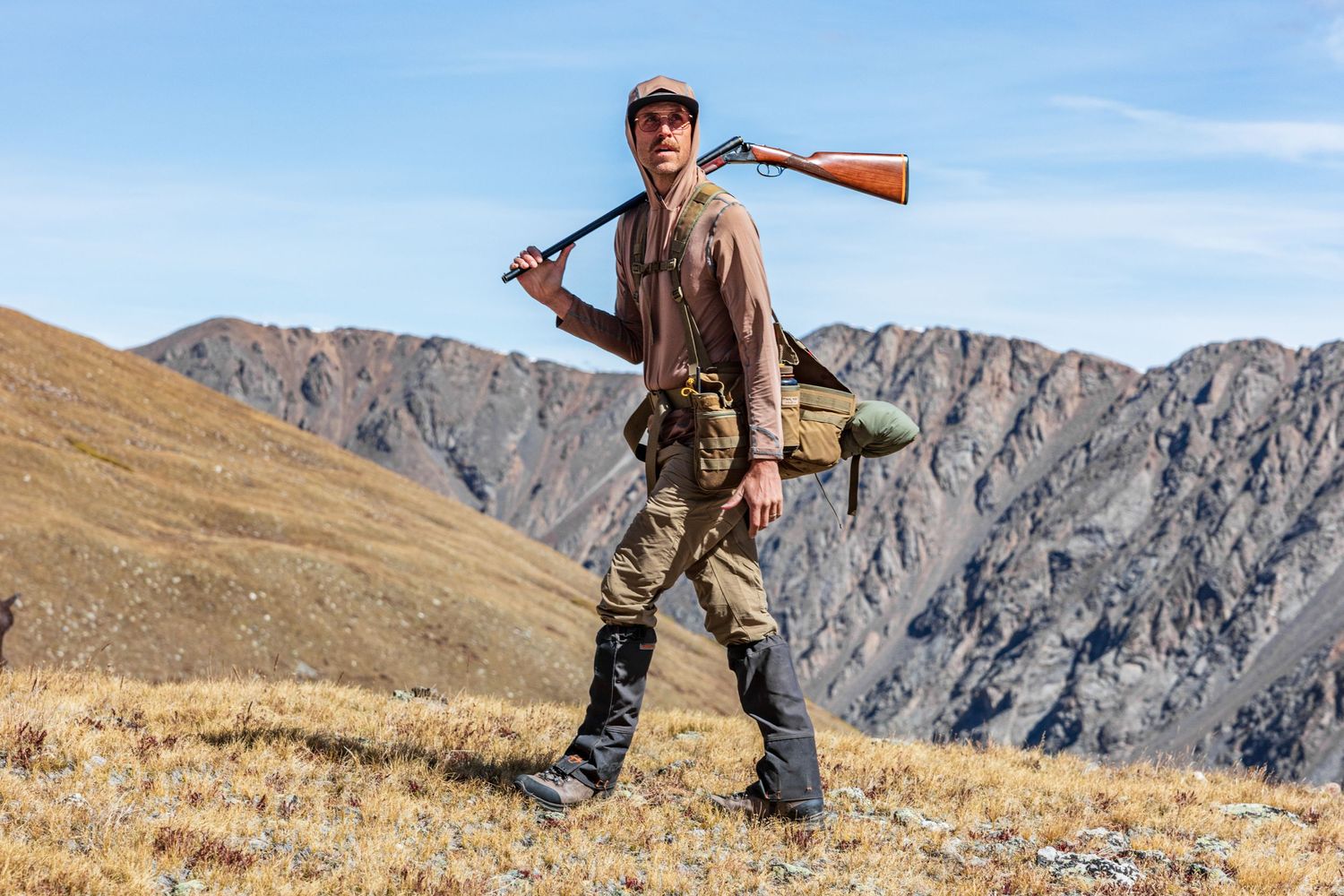
No insult is intended to those who bust pheasants out of snow-choked cattail sloughs, or pursue any sort of wild bird. Each has its own challenges. However, when the day is measured in thousands of vertical feet, chukar hunters earn their vanity. Borderline dangerous heart rates, a knee strain or two, and a few liters of sweat are par for the course.
It is surprising that a pursuit that is already so difficult is governed by a dogmatic code of ethics. These aren't just the dictates of curmudgeonly has-beens. The hard way is willingly assumed by most converts. Of course, ethics are found throughout wingshooting and hunting in general. With chukar hunting, it is just hard to say why. With low chances of success, why make it harder than it needs to be?
The birds sail along a contour line, then tip up just as they get too small to see. It is hard to tell whether they hit the ground running, fleeing to the cliff bands that we came down. Those cliffs are also adorned with the marks of ancient passers-by.
Rows of elk with exaggerated antlers leave no doubt about the preferred quarry in this place two thousand years ago. There are a few bird tracks cut into the face too, about the right size and shape to be sage grouse. They certainly don't represent chukar. The colorful objects of our pursuit are newcomers, introduced to the dry country of the West less than a century ago.
Chukar are a consolation prize for the demise of western rangeland. Cheatgrass, the scourge of native sagebrush and bunchgrass plant communities, is their bread and butter. Spread by overgrazing and wildfires, cheatgrass impacts native species, from sage grouse to mule deer. Chukar thrive on the stuff. Both evolved together in the dry country of Afghanistan, Turkey, and India.
Wherever you find cheatgrass, water, and topography, you can find chukar. However, that recipe is no guarantee. Fresh tracks in the sand don't even promise that you'll get a shot. Their ancient Sanskrit name is onomatopoetic. It describes the taunting “chuka-chuka-chuka” as a covey calls to reconvene on some far ridge, after deftly kicking your ass.
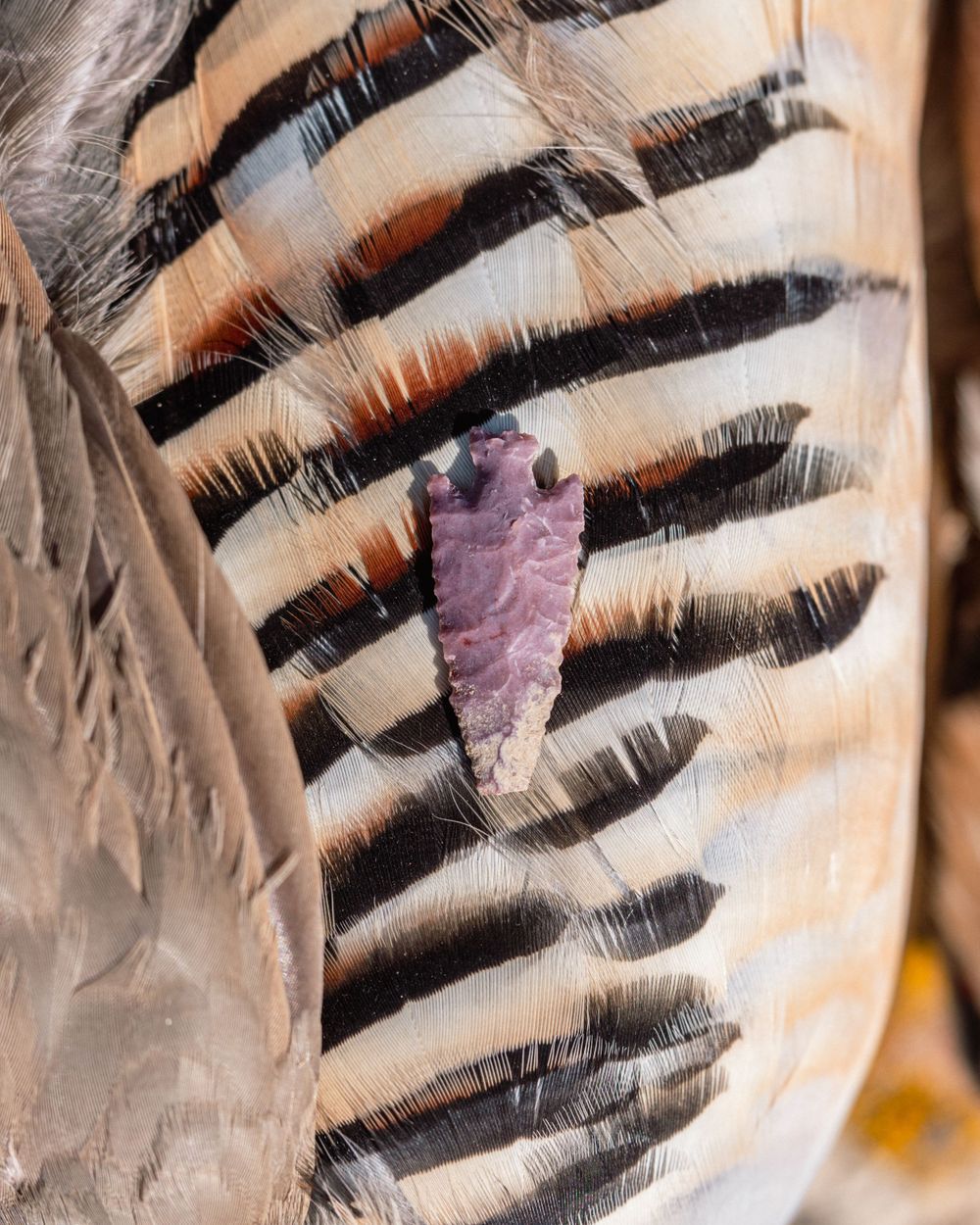
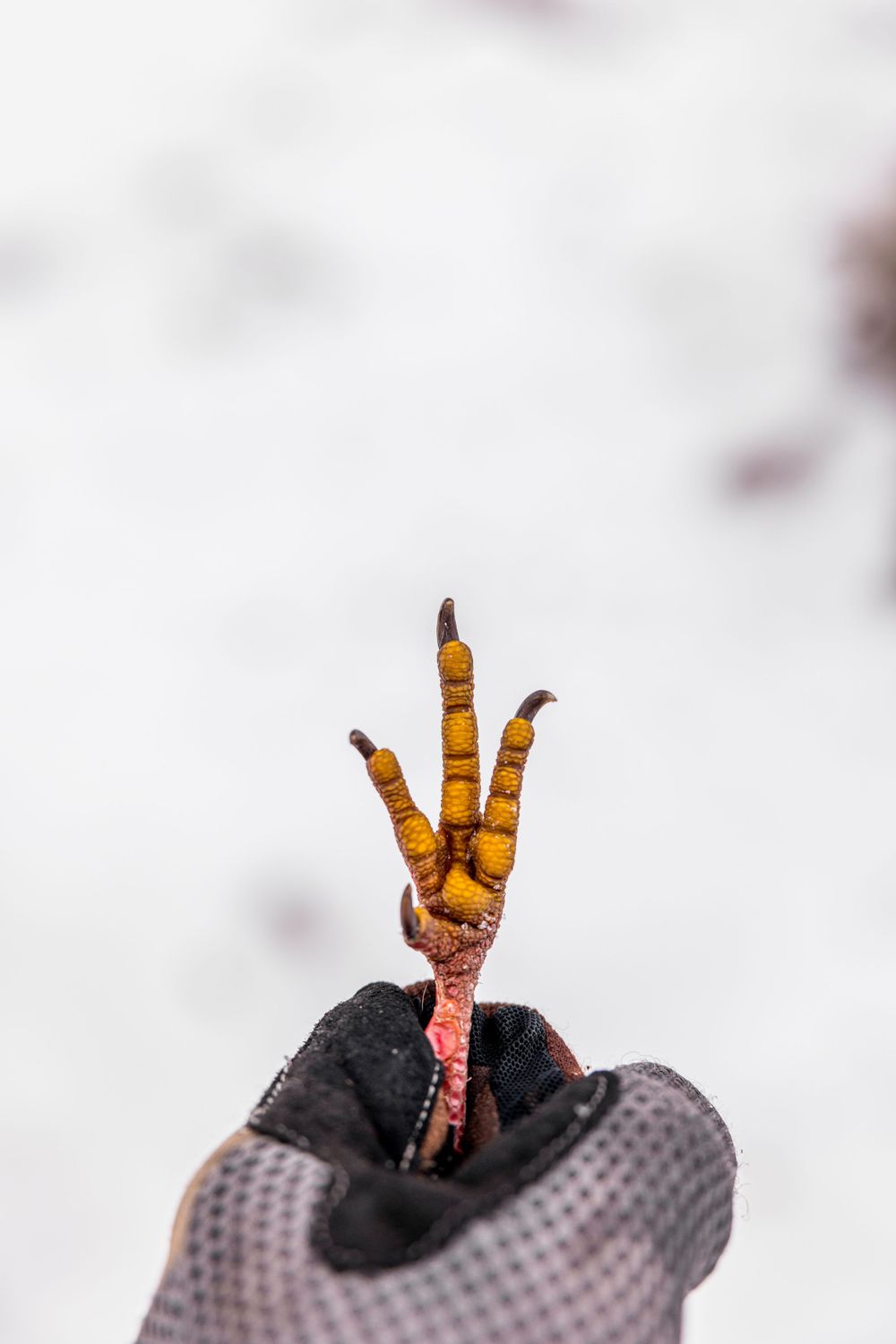
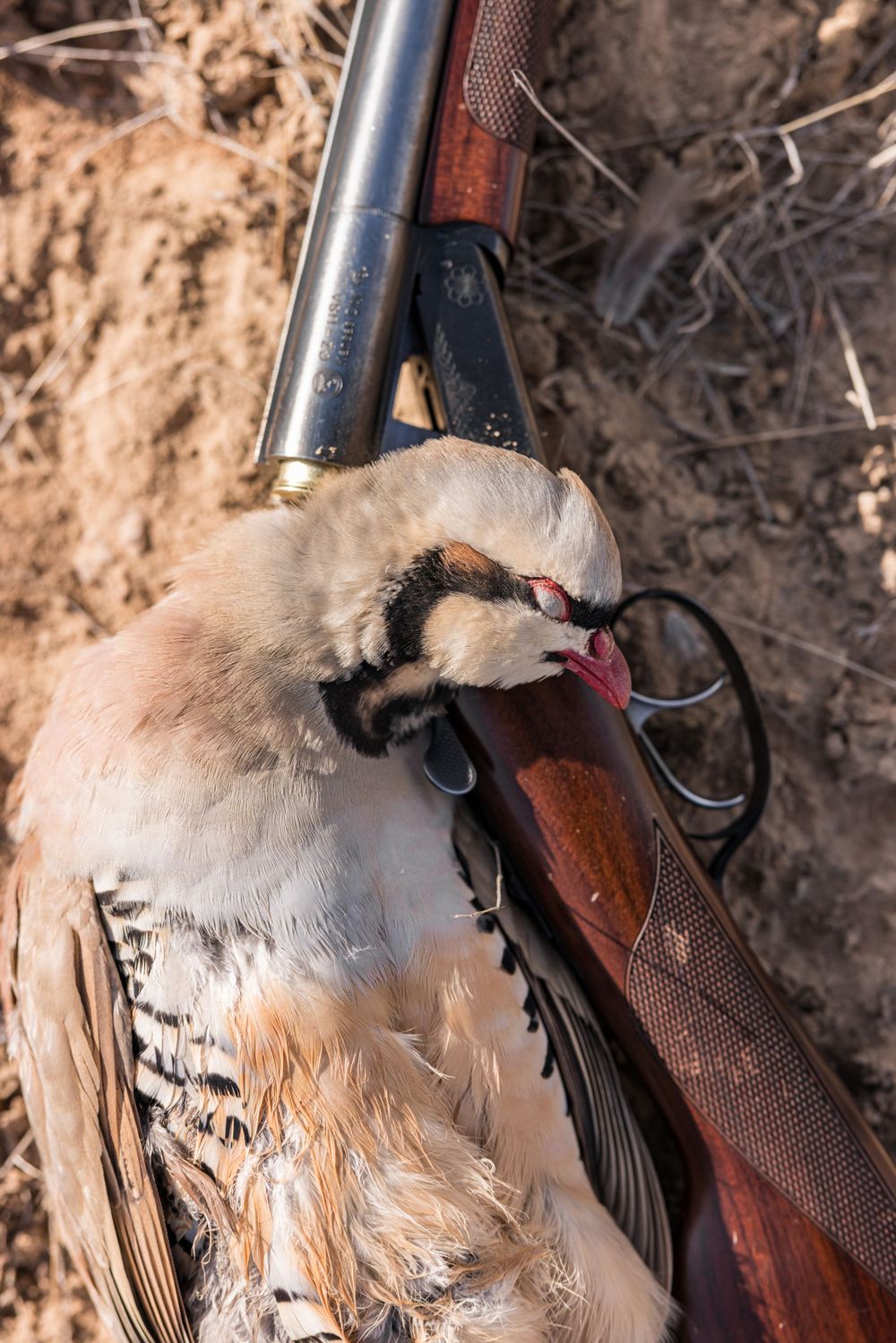
They are schooling us today, but we ferret them out on a slope strewn with bucket-sized boulders, and proceed to bounce the covey from one rocky cut to the next. They eventually present a few shots within range, and I tease Dan’s good shooting as the birds repeatedly break his direction. Now in the fray, my casual attitude of the morning morphs into predator drive. Bloodlust is soon rewarded as a straggler banks right. I stand in the crisp morning air, feeling the bird's sixteen ounces of warmth.
By any material measure, hunting chukar is a waste of time. Much like the ancient nomads, modern hunters attach a lot more significance to ungulates like deer and elk. Even though both modes of pursuit are likely a net loss after gear and time investments, there's just more ‘wow' factor to a big animal on the ground.
Managing agencies seem to think so too. Most western states give only casual attention to wild chukar management. Some states have no population monitoring, with seemingly arbitrary season lengths and bag limits hastily scratched out by managers who have many other concerns.
Between flushes, I stoop to pick up rusty hulls left by some cursed autoloader. This newfound honey hole is far from the truck in a wild place, but clearly other hunters pursue this covey. Some hunters want a hand-me-down map pin and tailgate brags en route to a contrived upland slam. Some are disciples of the hard way, content to honor the chukar code and see what the land gives.
Never sure which have been or will be here, I pocket the spent shells, but I only shoot one bird before we decide to move on. This winter is exceptionally warm and dry. Most late seasons, just flushing birds one time too many can kill them, as the covey can't reconvene to huddle before the cold night falls.
More people come to chukarland every season, so it’s hard to say what the future holds. It will almost certainly be busier. It would be a stretch to argue that isolated overhunting of an exotic species is of any ecological consequence. Like other covey birds, chukar are far more susceptible to deep snowdrifts, summer hailstorms, and other whims of the weather.
Nevertheless, most chukar hunters jealousy guard their spots, only revealing them to their best friends. More hunters might not necessarily mean fewer birds, but they can definitely mean less fun. Massive public land parcels cover most chukar habitat, but birds only occupy a few ideal spots. Experienced hunters- or more likely, those that have been given a pin, know exactly where to focus their efforts.
Increasing chukar hunting pressure threatens the illusion of wilderness. There's nothing worse than driving for hours only to find another truck at the end of a remote two-track. But there is a better reason to keep chukar spots more secret than your bank account number: the joy of doing it the hard way is too good to take away from anyone. That is why chukar hunters have a code.
Dan and I lay out a big loop that will lead us back to the truck. He walks the west rim of a ridge. I follow a line of greener cheatgrass and less wind, but in doing so ignore the cardinal rule of any bird hunt: always follow the dog. Lefty finds a nice covey of Hungarian partridge, then a group of chukar in a little ridgetop notch. I waste a few shells on Hail-Marys, but Dan connects.
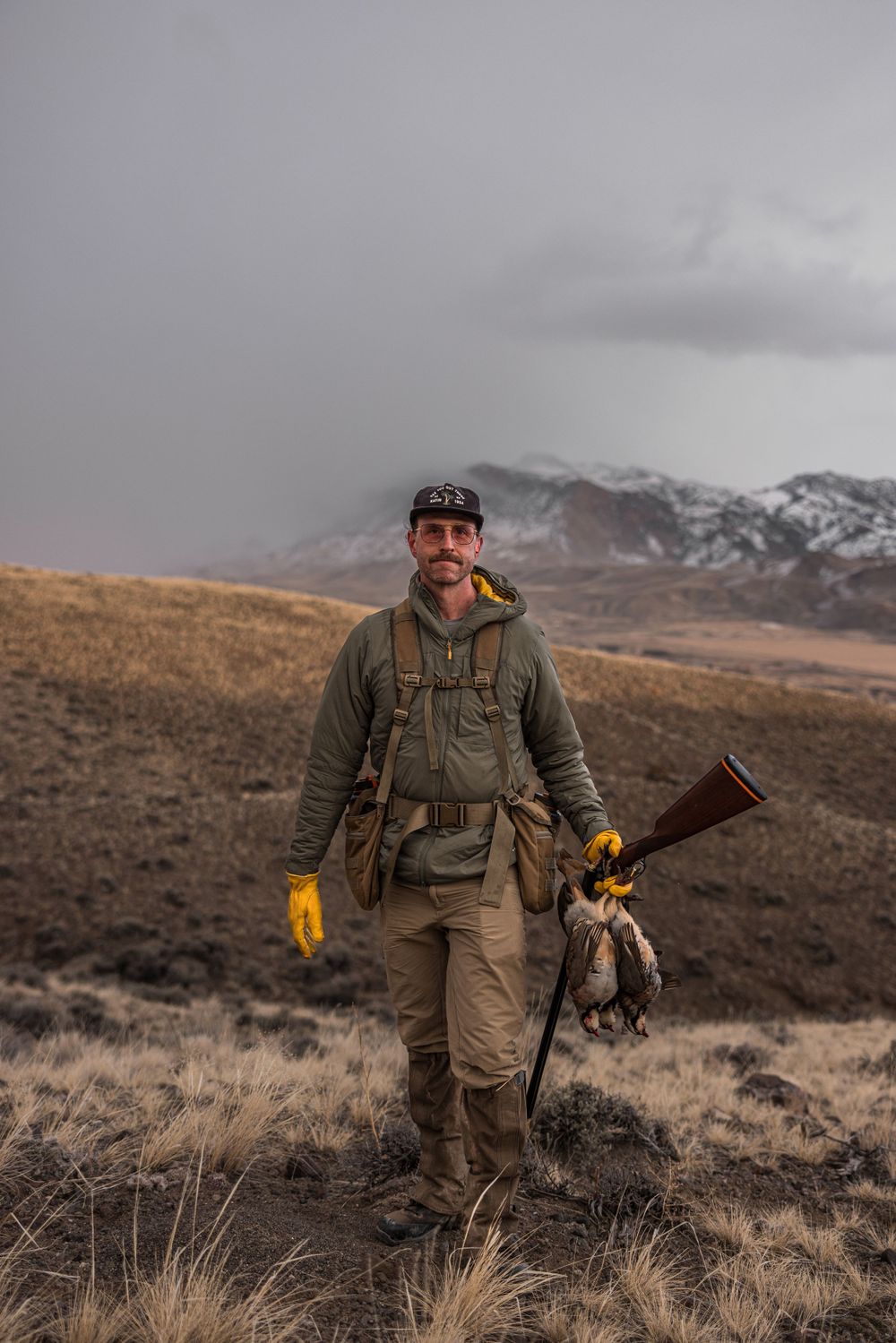
It's only noon when we return to the truck, but we nurse blisters and sore joints left by five hours of tough terrain. We have a whole afternoon of hunting ahead, but we are already tired. For the 75 or so birds we've seen, a laughable few burden our vests. Wingshooting is inherently impractical. That keeps even chukar hunters humble. We are simply here to test our will and our strength against these birds.
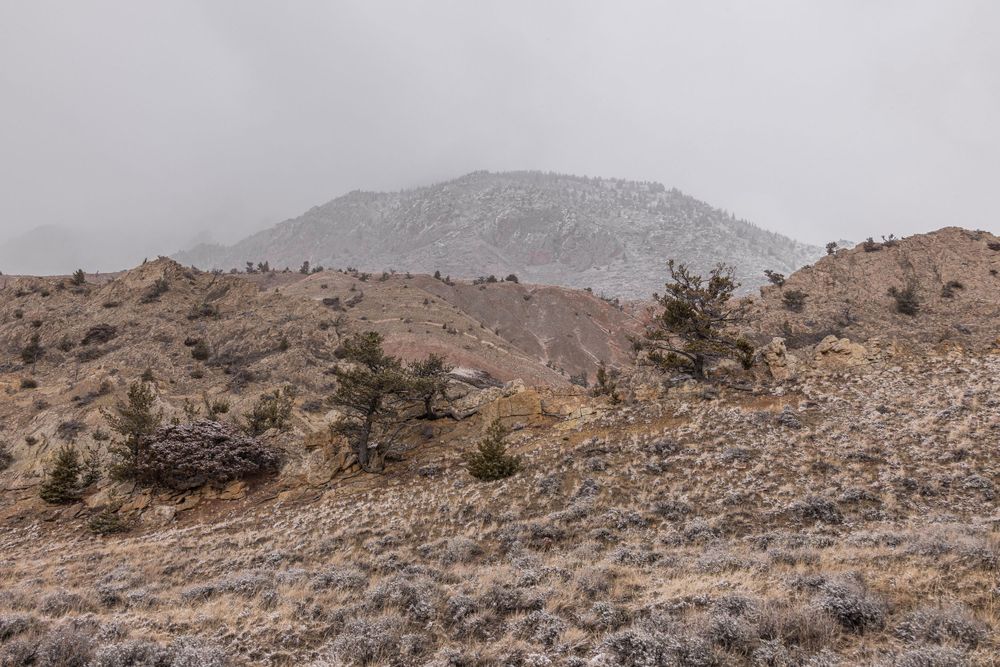
The afternoon is spent exploring new spots. They are a bust, offering only lonely desert beauty. At sunset, we make one more walk as snow squalls waltz with golden light. Shadows fall over cliffs and the steep bowls above. Five minutes from the truck, Lefty starts tracking. We hastily scramble after him across the slope, chasing the yet unseen. They are certainly running ahead of us.
A quick point, and they go, ejecting left and right out of the shadows. Screeches and furious wings cut through the wind. The setting sun ignites barred breasts, guiding our gun barrels to their to mark. We stand in speechless afterglow and watch Lefty work the sage till he retrieves both doubles.
Back at the truck, we unload a bounty of beautiful late season chukar, then drive off the mountain into cold twilight and a full-fledged snowstorm. The birds are not our reward. Our reward is doing it the hard way.